

Engineering education and technological leadership: KFU hosts plenary session of the 15th Forum of Engineering and Technological Universities of the Union State of Russia and Belarus
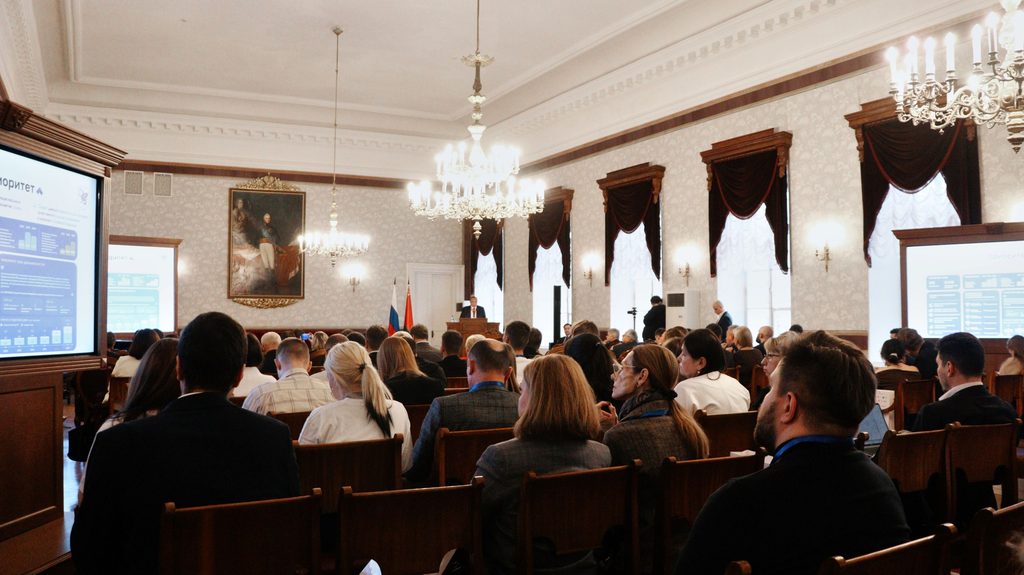
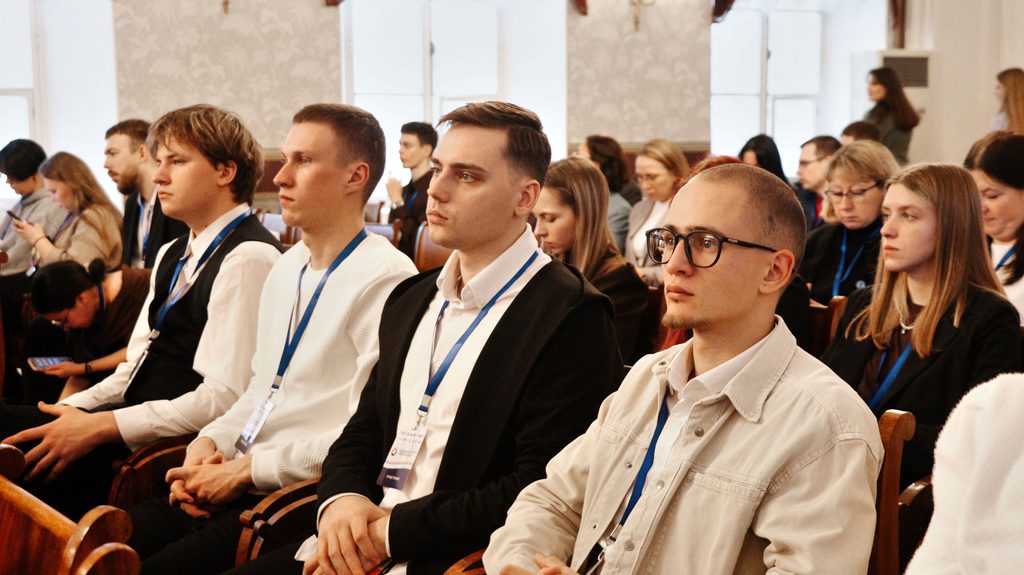
Kazan Federal University hosted a plenary session as part of the 15th Forum of Engineering and Technology Universities of the Union State, Universities of the Future: Integrating Education, Science and Industry, on the 10th of November. The forum was coordinated by KFU’s International Office.
The session was moderated by Timirkhan Alishev, KFU’s Vice-Rector for International Affairs.
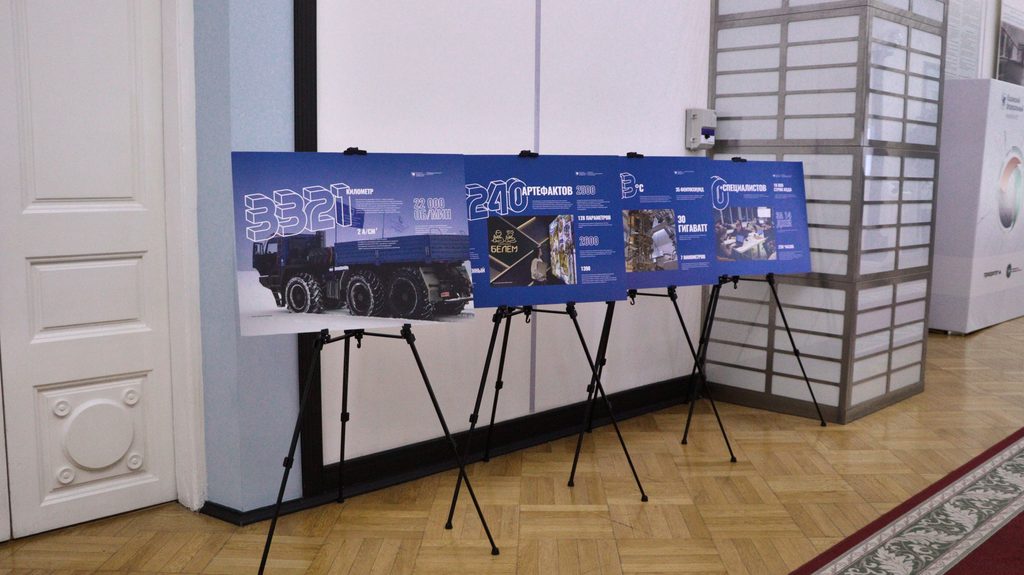
In the foyer of Kazan University’s assembly hall, guests were welcomed by the We Count exhibition. Prepared by KFU’s Department of Information Policy, the exhibition presents the university’s achievements and results through numbers.
“KFU is a key institution within the University of the Union State as a whole. Today, more than 18 universities are members of the network partnership. It is worth noting that, as part of the Summer University programme, we hosted the Network University’s summer school in software engineering. There is also a proposal to launch a Visiting Professor project with support from the Standing Committee of the Union State. This would allow us to send our young specialists to Belarus and welcome their counterparts here on a regular basis,” Timirkhan Alishev stressed.
The first speaker was Andrey Keller, Director of KFU’s Naberezhnye Chelny Institute. His presentation was entitled “Priority Areas for the Development of Engineering Education in Pursuit of Russia’s Technological Leadership Goals.”
“I will begin with what sets the framework for this entire discussion: the nine national projects for technological leadership. These are not abstract areas but specific sectors: transport mobility, means of production, unmanned systems, new materials, space, food security, health, nuclear energy, and the bioeconomy. In 2025, two educational, methodological and interregional centres were established, eleven engineering classes were launched across ten regions, and ten laboratories were created. Kazan University is one of the participants in this project,” Keller noted.
The director of the KFU branch also discussed other initiatives.
“As part of the Priority 2030 programme, a pilot project is being developed to restructure the levels of professional education and introduce a new educational model. Six universities had been participating since 2023, and another eleven joined this year. A project to develop industry-based doctoral training is also underway. All of this provides essential digital infrastructure and a social mechanism,” he explained.
The next speaker was Andrey Safonov, First Vice-Rector of Belarusian National Technical University, who delivered a presentation entitled On the Development of Advanced Engineering Education in the Republic of Belarus.
“In an era of rapid technological transformation and digitalisation, the role of a technical university extends far beyond traditional teaching. A new-generation engineer is a specialist who is proficient in working with digital twins of complex systems, designs flexible automated production facilities, and possesses systemic and critical thinking skills in technology management,” he stated.
According to the Belarusian guest, his university rightfully holds the status of the country’s flagship institution for engineering education in terms of research, teaching methodology and practical training.
“The Council of Ministers of the Republic of Belarus has adopted a resolution approving the Concept for the Development of Engineering Education. The main objective of this document is to meet the real economy’s demand for highly qualified engineering personnel in full, while also raising the prestige of technical professions. One component of the concept is a roadmap. BNTU has been tasked not only with implementing internal reforms but also with coordinating the analysis of the concept’s effectiveness nationwide,” Safonov explained.