

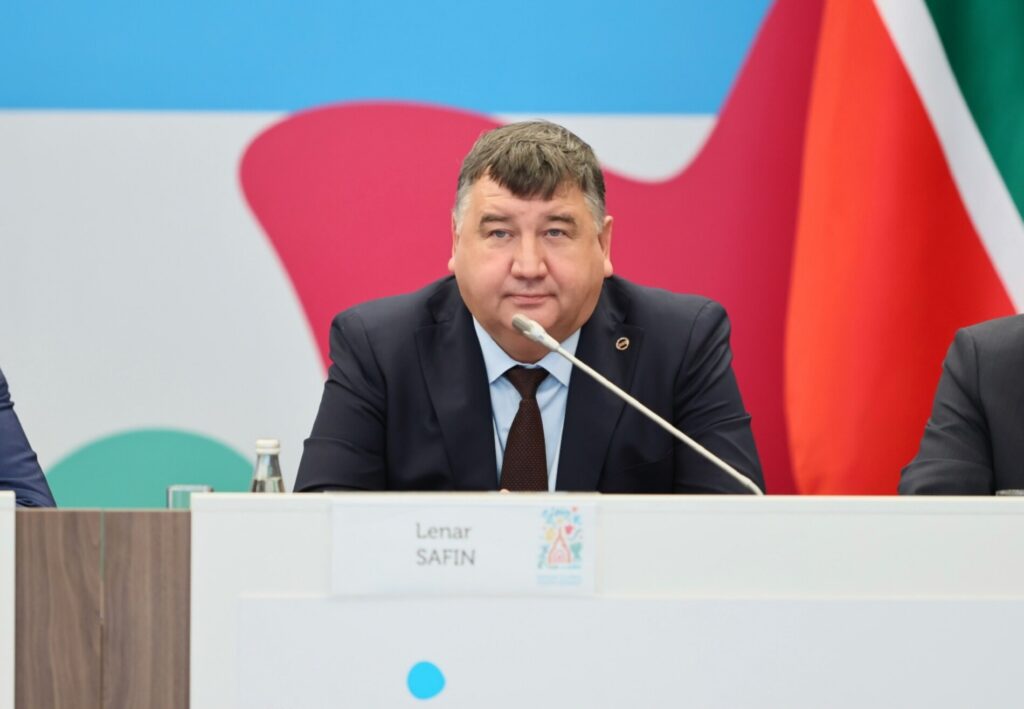
Rector Lenar Safin about the 5th Kazan Global Youth Summit: «Our goal is to hear the young people and to give them space for dialogue»
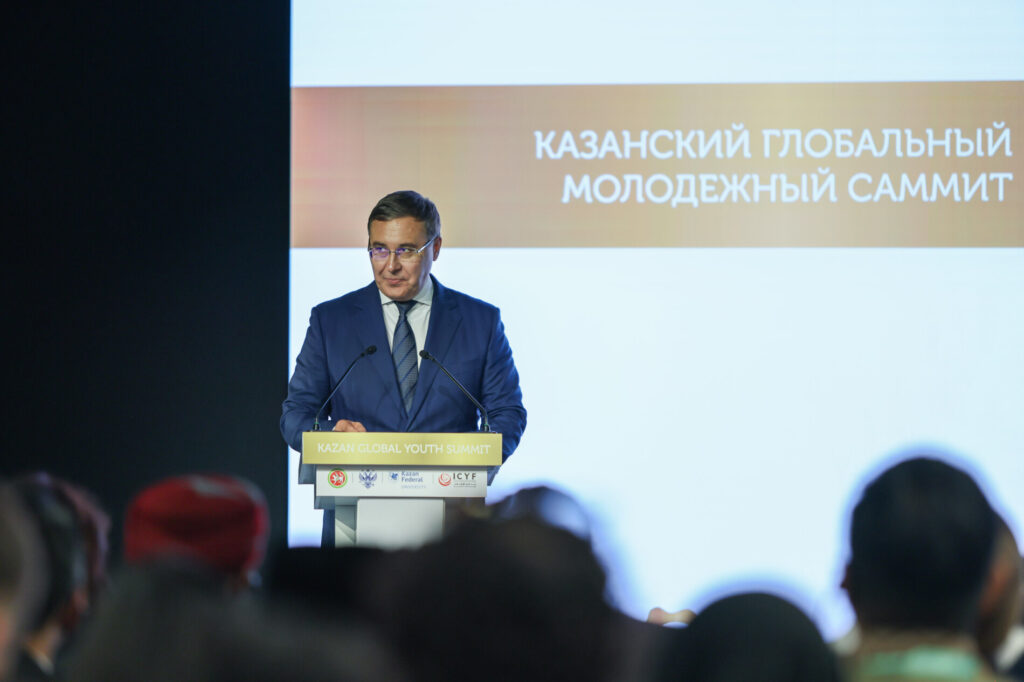
The 5th Kazan Global Youth Summit, a unique educational and expert platform for identifying key challenges and trends among young people, unfolded across multiple venues in the capital of Tatarstan during 26 to 30 August, 2026.
Kazan Federal University was one of the event’s organizers, hosting a significant portion of the program, from the International Rectors’ Forum to the Global Young Leaders Award.
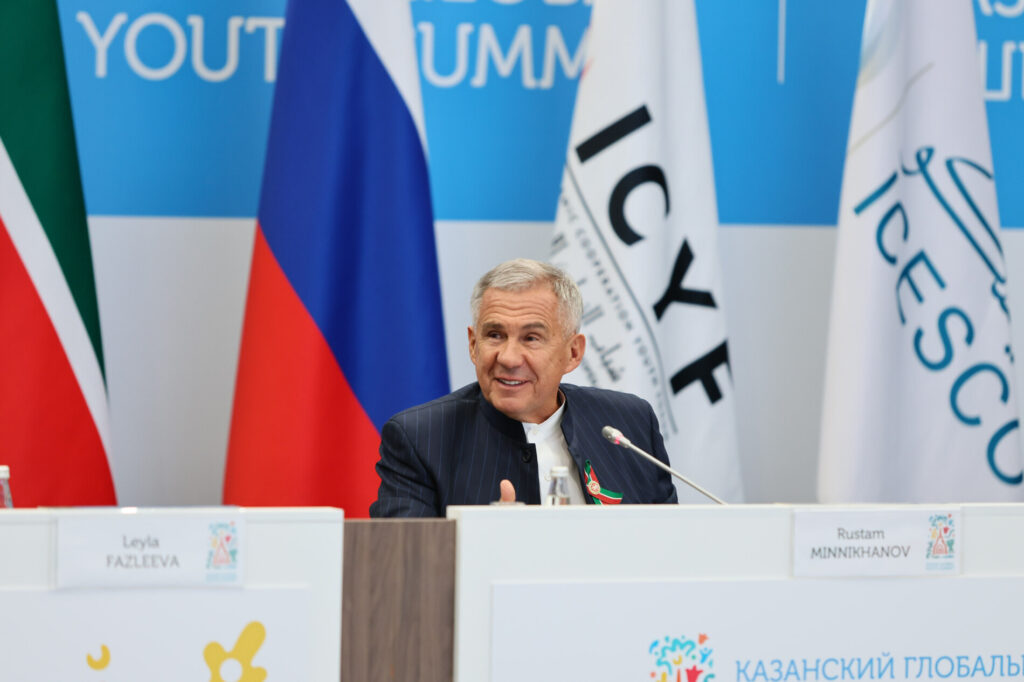
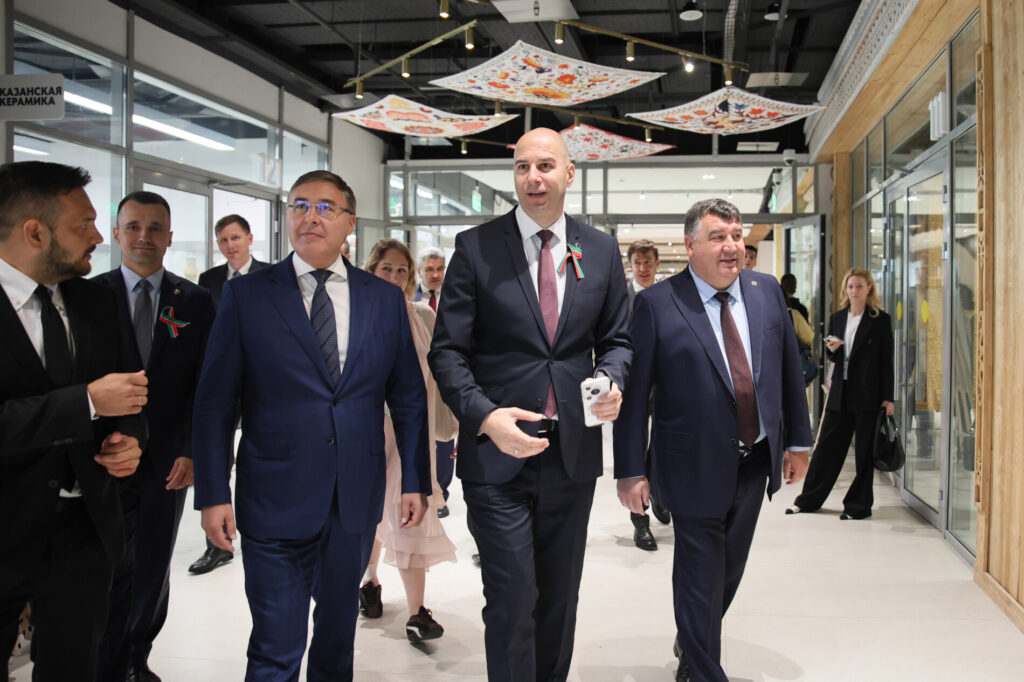
Rector Lenar Safin attended another significant event of the summit a meeting of its guests with Federal Minister of Science and Higher Education Valery Falkov and Rais (Head) of the Republic of Tatarstan Rustam Minnikhanov, on 29 August.
The meeting took place at the Center for Unique Crafts and was attended by rectors of Russian and international universities, ministers, young diplomats, scientists, bloggers, and heads of international organizations and educational foundations.
Rustam Minnikhanov stated that in an era of rapid change, education determines the resilience of both the individual and the state as a whole.
«Our shared goal is to create a system that will enable every young man and woman to find their place both professionally and in their personal development, one in which reliance on traditional values is harmoniously combined with broad career opportunities,» said the Rais.
The head of the Russian Ministry of Science and Higher Education, in turn, noted that in an era of global change, working with young people is particularly valuable.
«Modern challenges require the training of highly qualified personnel. Education must foster critical thinking and a willingness to embrace new technologies, while preserving cultural identity and moral compass,» said Valery Falkov.
He emphasized to the meeting participants that Russia is open to international students. Currently, approximately 422,000 students from 185 countries are studying in the country. According to the minister, Tatarstan, and Kazan University in particular, is the undisputed leader in this area.
Valery Falkov urged everyone present to visit one of Russia’s oldest universities. «Kazan University is renowned for its rich history and scientific schools, and it has extensive experience in international cooperation. Its effective work in developing its branches in various countries is a shining example of how Russia offers young people from all over the world the opportunity to receive our high-quality education without having to leave their home. And if today we talk so much about the connection between our cultures and traditions, then the university is also a tradition. Therefore, those who haven’t yet should definitely visit KFU,» the minister concluded.
Furthermore, university rectors and relevant ministers from foreign countries shared their experiences in developing education systems, career guidance, and educational work. Several heads of higher education institutions also mentioned cooperation with KFU, noting the productivity of joint research, educational programs, and academic exchange programs.
Dr Safin emphasized that the main theme of this year’s youth summit — the transformation of education in the context of global change — is very close to the university’s heart.
«We prepare young people for a world where technologies, professions, and skill requirements are rapidly changing. It’s crucial for us that the future of education is discussed not only by leaders and experts, but also by young people themselves — those who will shape it. Therefore, KFU’s role as a co-organizer of this summit is an opportunity not only to share our experience but also to listen to young people, providing them with a space for dialogue with rectors, ministers, scientists, and leaders from around the world. This year, this dialogue brings together over 250 participants from 35 countries. And I hope that all of them will leave Kazan not only with new impressions but also with the understanding that education and science give young people the opportunity to influence the future, and international cooperation helps them do so together,» commented Lenar Safin.