

Development of hybrid laser-plasma technologies, new material in magnonics, and industrial design are being discussed at the 15th Forum of Engineering and Technological Universities of the Union State of Russia and Belarus
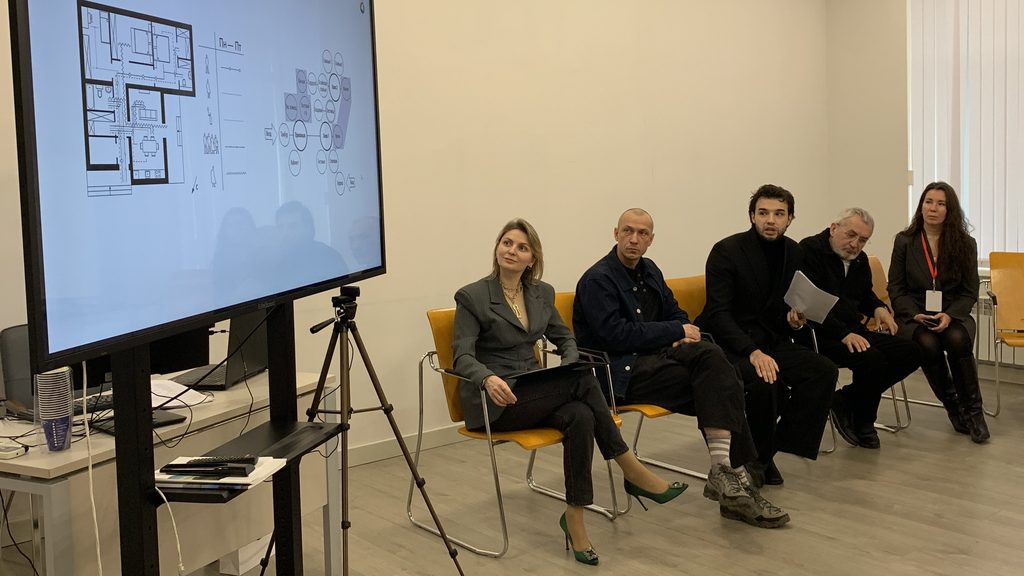
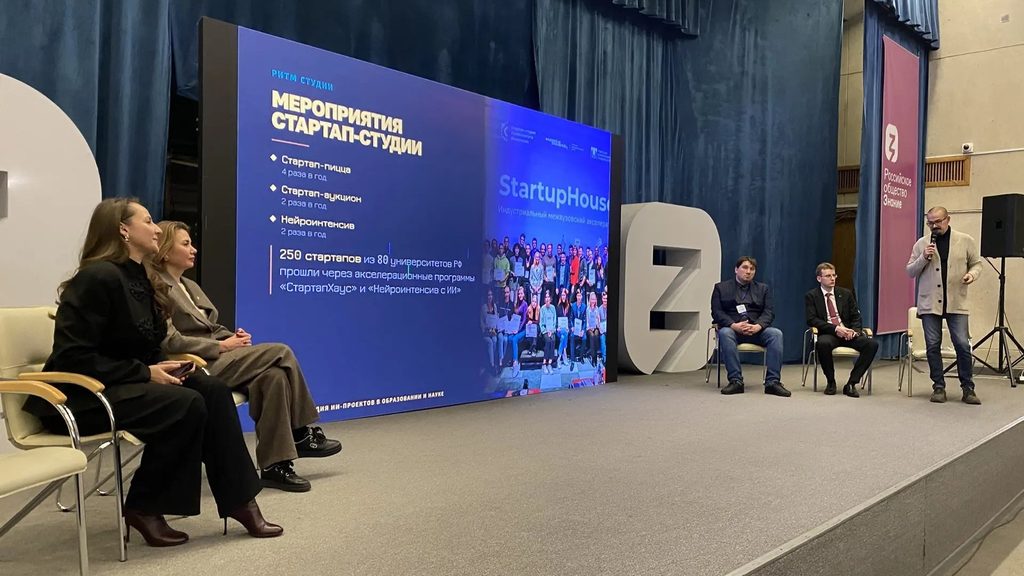
Yesterday, November 10, Kazan Federal University hosted a session entitled Priority Areas of Research, Scientific and Technological Development, and Innovation at Universities of the Union State as part of the 15th Forum of Engineering and Technology Universities of the Union State, Universities of the Future: Integrating Education, Science and Industry. The forum is coordinated by KFU’s International Office.
As part of the event, KFU’s Institute of Physics hosted a roundtable discussion entitled New Structural and Multifunctional Materials. The discussion was moderated by Irina Romanova, the Institute’s Deputy Director for Research.
Sergey Kharintsev, Head of the Department of Optics and Nanophotonics, spoke about fourth-generation solar energy technologies. He noted that this field is currently attracting considerable interest worldwide.
The speaker identified energy shortages as a major challenge today. He also said that advances in materials and technologies would make solar energy widely accessible, affordable and efficient.
Olga Yatskevich, Professor in the Department of Technological Equipment at Belarusian National Technical University, gave a presentation entitled Development of Hybrid Laser–Plasma Technologies and Processing Equipment for Producing Coatings for Various Functional Applications.
“Today, conventional coating deposition and laser processing technologies are beginning to reach their limits. We need fundamentally new properties, self-adapting systems that change over time, and processing not only at the microscale but also at the nanoscale — modification is essential. The tools currently at our disposal are not always suitable,” Yatskevich explained. “Developing hybrid technologies is therefore becoming increasingly important. And ‘hybrid’ does not simply mean adding two technologies together; it means achieving a synergistic effect by combining them.”
In his presentation, Synthesis and Investigation of Promising Magnetic Nanostructures, Roman Yusupov, Head of the Department of Quantum Electronics and Radiospectroscopy at the Institute of Physics, discussed a new material in magnonics — a branch of quantum electronics concerned with the transfer of energy or information by magnons in solids — namely, compositionally graded ferromagnetic films. One promising application he highlighted was the possibility of using current pulses to switch magnetic states in systems with steep composition gradients for magnetoresistive memory.
As part of the same session, the building of KFU’s Preparatory Faculty for International Students hosted a roundtable discussion entitled Industrial Design and Human-Centred Technologies: A New Direction in Engineering. The discussion was moderated by Karina Nabiullina, Director of KFU’s Institute of Design and Spatial Arts.
“Today, we are discussing a fundamental shift in engineering thinking — a transition towards human-centred technologies and industrial design as a key integrator of education, science, and industry. Industrial design is no longer simply about making forms aesthetically pleasing; it is an independent direction in the evolution of engineering thought, shaping the experiences, ergonomics and living environments of people in the future,” she said.
The event also featured the following sessions: Development of Engineering Education in the Union State; Youth Innovation Entrepreneurship; and An Engineer’s Career: Personal Development and Professional Pathways.