

KFU’s Department of Genetics celebrates 50th anniversary
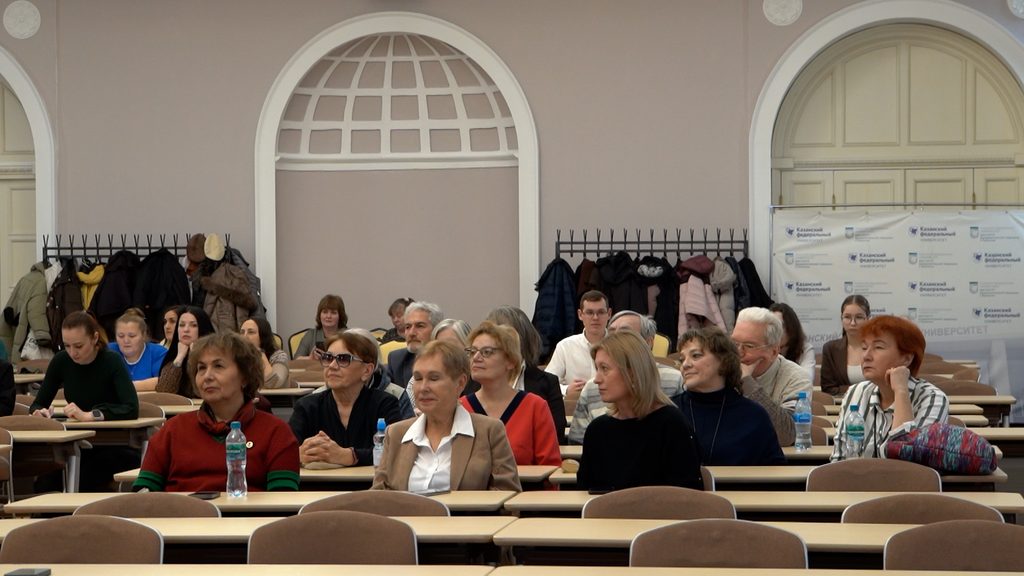
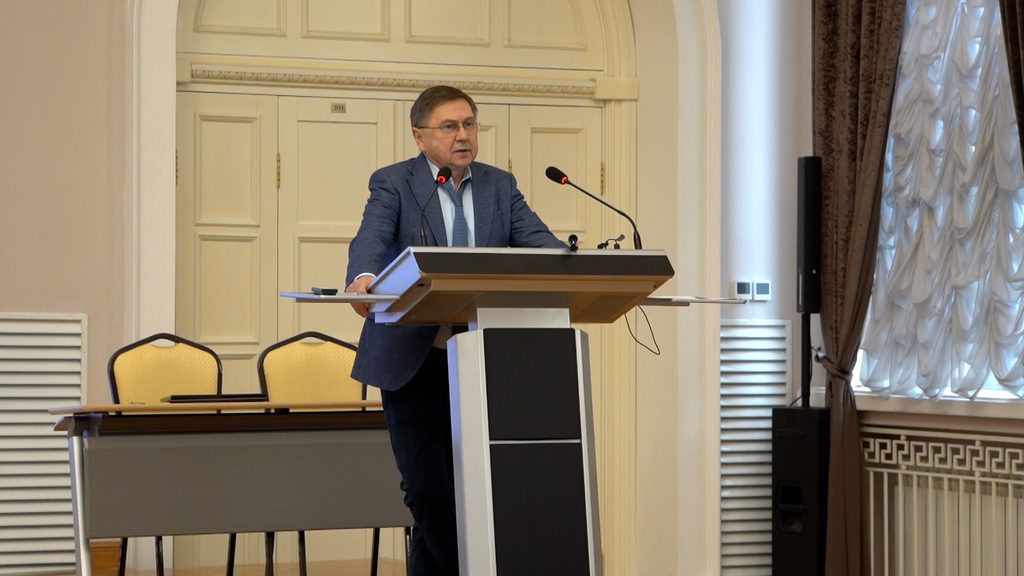
On November 13, the Institute of Fundamental Medicine and Biology hosted a national scientific conference marking the 50th anniversary of its Department of Genetics. Speakers included Institute Director Andrey Kiyasov, department founder Boris Barabanshchikov, and many others.
Kiyasov emphasized the significance of the occasion for the university as a whole.
“This was one of the first genetics departments established in the Soviet Union. I am confident that this field has a great future,” he said.
Joining the conference online, Barabanshchikov recalled a dark chapter in the history of Soviet biology, when geneticists lost their positions, laboratories were closed, and staff members were dismissed. (He was referring to the persecution of classical genetics in the Soviet Union following the August 1948 session of the Lenin All-Union Academy of Agricultural Sciences — Russian editor’s note.)
Airat Kayumov, head of the Department of Genetics, highlighted its important role in training professionals for a wide range of fields.
“Our department was not established until 1976, and to this day we train specialists for many sectors of the economy, including medicine, agriculture, diagnostics, and others. Clinical diagnostic laboratories now use PCR-based testing, which is precisely our area of expertise,” he explained.
According to Kayumov, the department continually updates its curricula to meet evolving needs.
“A few years ago, we launched a program in genomic selection, which involves identifying genetic markers in plants and animals to produce desired traits rather than selecting for whatever mutations happen to arise. Our department’s faculty and staff are also contributing to the university’s work on mRNA vaccines, including vaccines against viral diseases such as hemorrhagic fever with renal syndrome (HFRS). Researchers at the Laboratory of Gene and Cell Technologies are also working to identify and characterize strains of the virus that causes HFRS to support the development of highly effective vaccines,” Kayumov said.
Albert Rizvanov, a professor in the Department of Genetics, discussed gene therapy as a practical extension of fundamental genetics.
“Gene therapy allows us not merely to observe and describe biological processes, but to intervene in them, including to treat previously incurable diseases. For example, we are developing gene therapies for rare inherited conditions, also known as orphan diseases,” he explained.
Rizvanov expressed his hope that the department would remain in high demand.
“People often say, ‘All diseases come from stress.’ But we now know that all diseases come from genes,” he concluded with a smile.
Today, the Department of Genetics has 6 full professors, 15 associate professors, 6 senior lecturers, and 2 assistant lecturers. Its faculty includes 6 holders of Doctor of Sciences degrees and 17 holders of Candidate of Sciences degrees. The department currently enrolls 35 doctoral students, 62 master’s students, and 75 undergraduate students.