

6th International Workshop for Young Scientists on Catalytic Upgrading of Heavy Oil opened at KFU
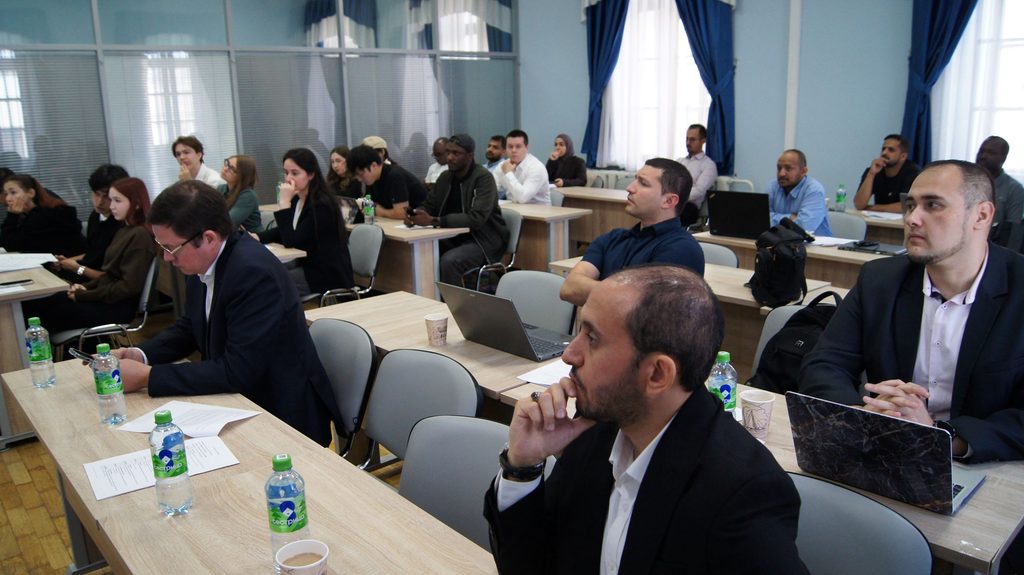
A two-day scientific event held on October 1–2 at Kazan Federal University served as a platform for presentations by leading researchers in oil and gas technologies. The event was organized with the support of the Russian Science Foundation. Its purpose was to familiarize young scientists with the latest global advances in the production and refining of heavy and extra-heavy oils.
This year’s workshop focused on pressing issues in the oil and gas sector, including the development of unconventional hydrocarbon resources; steam-based thermal recovery methods for heavy oil; catalytic systems and catalysts for altering the composition of heavy oil; mechanisms of aquathermolysis catalysts; aquathermolysis kinetics; catalyst adsorption on reservoir rock; and the catalytic activity of reservoir-rock components. Particular attention was paid to the outcomes of Russian Science Foundation’s project Development of New Technological Approaches to Catalytic In-Situ Upgrading of Heavy and Extra-Heavy Oil. KFU researchers presented the data obtained under the project. In total, the international school featured more than 30 scientific presentations.
At the opening ceremony, the project leader, Lead Researcher at the Institute of Geology and Petroleum Technologies and Director of the Small-Tonnage Chemical Technology Park at Kazan Federal University, Mikhail Varfolomeev, addressed the participants.
“Within the world-class laboratory, we not only conduct scientific research but also hold such events every year to facilitate the exchange of experience. Leading international experts take part and share their findings, knowledge, and competencies directly with those who are taking their first steps in science,” noted Varfolomeev.
Invited lecturers at the event included professors from Kazan Federal University, Russia; the National Polytechnic Institute, Mexico; Takshashila University, India; Xi’an Jiaotong University, China; the University of Calgary, Canada; Sokoto State University, Nigeria; the National University of La Plata, Argentina; Southwest Petroleum University, China; King Fahd University of Petroleum and Minerals, Saudi Arabia; as well as other speakers.
“It is a great honor for us to welcome the participants of the 2026 meeting. Today, heavy oil upgrading has become one of the most important topics for the petroleum industry. Events of this kind are of enormous importance for sharing expertise and discussing the latest developments in this sphere. As a pioneer in this area, KFU can demonstrate its latest achievements and discuss results of practical significance for the oil industry,” said Jorge Ancheyta, Professor and Lead Researcher at Kazan Federal University and the National Polytechnic Institute of Mexico.
The speakers described the synthesis and investigation of various catalyst precursors to evaluate their performance and achieve a high degree of in-reservoir upgrading of heavy oil during steam injection. According to the findings, different catalysts improve the composition and properties of heavy oil when used in aquathermolysis. In addition, the co-injection of hydrogen-donor solvents and catalysts with steam can reduce the required steam-injection volume, thereby lowering energy and freshwater consumption and improving process efficiency.
However, some aspects still require further study in order to better understand how these additives affect catalytic in-situ upgrading under reservoir conditions. Systematic research is needed to develop more economically viable and highly effective catalyst precursors. This work should include comprehensive analysis of heavy-oil fractions before and after the steam-injection process.
A separate part of the program was devoted to presentations by young researchers and lectures from industry representatives, including a plenary lecture delivered by Tatneft. During the first day, participants presented their work to invited experts and colleagues, while the open lectures offered an opportunity to discuss the latest scientific trends directly.
“Every year, we try to attract new speakers. This year, we have particularly interesting presentations focused not only on oil-upgrading technologies, but also on the use of supercritical fluids and in-situ hydrogen production. These areas have great potential,” emphasized Mikhail Varfolomeev.
It should be noted that KFU researchers annually implement a range of Russian Science Foundation projects at their laboratories. Alongside fundamental research, covering catalyst development; identification of mechanisms involved in upgrading heavy hydrocarbon feedstocks in porous media using experimental and theoretical approaches; development of kinetic models of chemical transformations; and fluid flow in porous media — the university is actively working with industrial partners to bring these technologies to pilot-scale application.
For example, Zarubezhneft has conducted a series of successful tests of oil-soluble and water-soluble catalysts at a field with substantial reserves of bituminous oil. In the future, this research project is expected to significantly reduce costs and help address the technological and environmental challenges associated with heavy-oil production.