

CO2-assisted enhanced oil recovery featured in new study
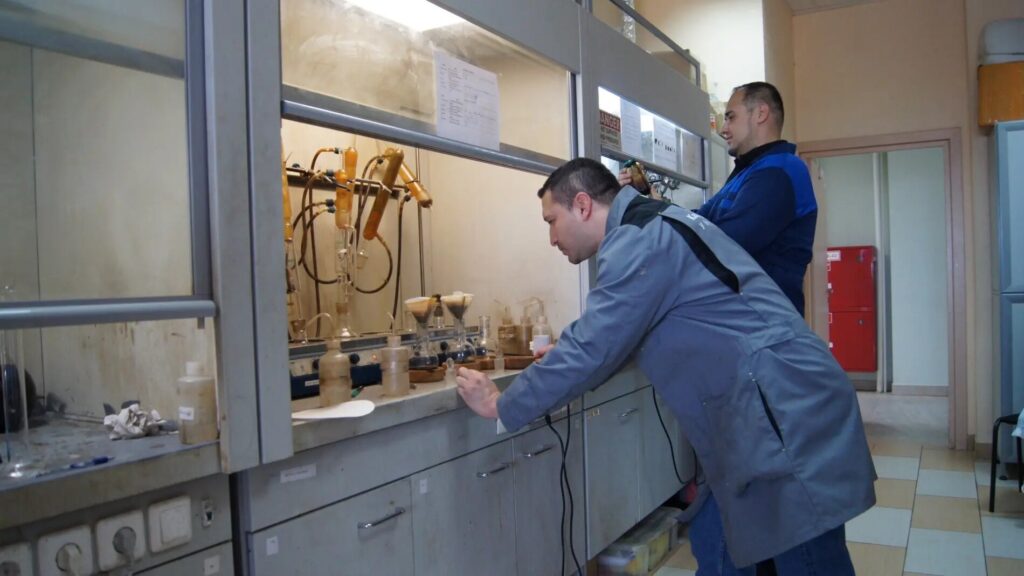
A model developed at the Institute of Geology and Oil and Petroleum Technologies allows for the selection of ideal conditions for treating heavy oil with hot steam and carbon dioxide during its production.
One of the latest developments by our scientists will help oil companies improve the efficiency of extracting hard-to-recover crude oil, reduce energy and water costs, and lower harmful emissions. The results of the study, supported by a grant from the Russian Science Foundation (RSF), were published in Fuel.
According to the research, it was possible to inject not only steam but also carbon dioxide into the reservoir. The resulting mixture retains the heat needed to liquefy the oil better than steam alone. Carbon dioxide also enters into intermolecular interactions with the heavy components of the oil, further increasing its fluidity. The IGPT research team was the first to describe the processes that occur with heavy oil when it is treated with a mixture of superheated steam and carbon dioxide.
The authors report that the combined injection of steam and carbon dioxide promotes the breakdown of heavy oil components—asphaltenes—converting them first into resins and then into even lighter compounds. In the presence of carbon dioxide and steam, asphaltenes converted into resins nine times faster than in a reactor containing nitrogen.
«From a chemical perspective, the combined effect of carbon dioxide and steam significantly reduces the viscosity of heavy oil and increases the production of lighter fractions, while simultaneously breaking down asphaltene aggregates. Furthermore, this mixture creates an acidic environment that promotes the formation of surfactants, dissolution of rock minerals, improving their permeability, and activates aquathermolysis — a process that irreversibly breaks some bonds in crude oil components,» notes Jorge Ancheyta, a leading researcher at the In-Situ Combustion Laboratory.
Based on the experimental results, the authors constructed a kinetic model — a mathematical description of all the key chemical reactions occurring in the reservoir. This model predicts, with 93% accuracy, how oil composition changes over time at different temperatures and carbon dioxide concentrations.
«From an economic perspective, improved production efficiency leads to a reduction in the price of hydrocarbon, the primary fuel, which benefits both producers and consumers. In the future, we plan to expand our research in this area and examine how the use of catalysts will affect the combined action of water vapor and carbon dioxide, including developing kinetic models for this process. We will use various highly viscous oils from fields in Tatarstan and other countries as our research subjects,» explains Mikhail Varfolomeev, Chair of the Department of Petroleum Engineering and Director of KFU’s Small-Tonnage Chemical Technology Park.
Scientists note that this development will help oil companies calculate optimal steam and carbon dioxide injection regimes in advance to achieve maximum crude production with minimal costs and environmental damage.