

Geophysicist explains why Atacama meteorites remain unchanged for millions of years
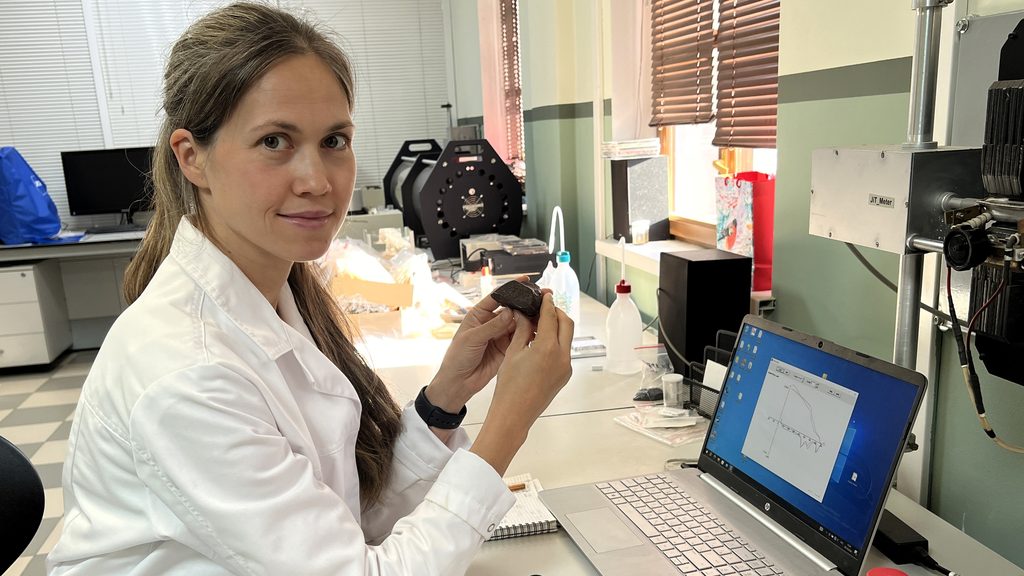
An international team of scientists, including Dilyara Kuzina, a leading research associate at Kazan Federal University’s Institute of Geology and Petroleum Technologies, has studied stony meteorites found in the northern part of Chile’s Atacama Desert. Among them were exceptional specimens that had spent more than 2 million years on Earth. The results of the study, which examined 49 meteorites recovered from the Calama area, were published in the journal Meteoritics & Planetary Science.
The samples were provided by the European Center for Research and Education in Environmental Geosciences (CEREGE, France) and the Vernadsky Institute of Geochemistry and Analytical Chemistry of the Russian Academy of Sciences.
“Together with our colleagues at CEREGE, we selected samples that met specific criteria to ensure that the collection was representative. The meteorites had to belong to different groups, weigh at least 100 grams, and have been found more than 400 meters apart,” Kuzina said.
To determine the meteorites’ terrestrial ages — the time they had spent on Earth — the French researchers measured their concentrations of the radioactive isotope chlorine-36 (³⁶Cl). This isotope forms through exposure to cosmic rays while a meteorite is traveling through space and gradually decays after it lands on Earth. The less chlorine-36 remains, the longer the visitor from space has been on the planet’s surface.
“I helped prepare some of the samples for these measurements. All 49 meteorites were ordinary chondrites, but their terrestrial ages varied considerably. Some had been on our planet’s surface for 85,000 years, for example, while others had been here for more than 2 million years. By comparison, meteorites from the Sahara, the deserts of Oman and Saudi Arabia, Iran’s Lut Desert, and Australia’s Nullarbor Plain typically have terrestrial ages ranging from a few thousand to a few tens of thousands of years. The Atacama, however, preserves extraterrestrial material that fell to Earth before modern humans emerged,” she noted.
The research was conducted in part under the Russian Science Foundation project Weathering of Meteorites from the Atacama Desert: Assessment Using Magnetic Methods, led by Kuzina. It also received support from a French national research program.
“Weathering, or the breakdown of rock through exposure to sunlight, wind, and temperature fluctuations, proceeds relatively slowly in the Atacama Desert. The secret to the meteorites’ long-term preservation is the Atacama’s exceptionally dry, stable climate: it has remained a desert for millions of years. The Calama area is slightly wetter than the southern parts of the desert, so its meteorites are younger on average. Nevertheless, even this area surpasses all other deserts on the planet in both the ages of its meteorites and their density: a systematic search yielded 38 meteorites per square kilometer. The search area covers approximately 550 square kilometers. More than 1,500 ‘space rocks’ have already been found there. We estimate that more than 20,000 undiscovered meteorites may remain in the Calama area,” Kuzina explained.
The study also showed that the degree of meteorite weathering depends not on how long a meteorite has been on Earth, but on its initial porosity. That porosity, in turn, is determined by impact events the meteorite experienced while it was still part of its parent asteroid.
The researchers’ ultimate goal is to model changes in the influx of extraterrestrial material to Earth over the past several million years and use those findings to predict how that influx might change in the future.