

KFU scientists continue uncovering mysteries of the Pyany Bor culture
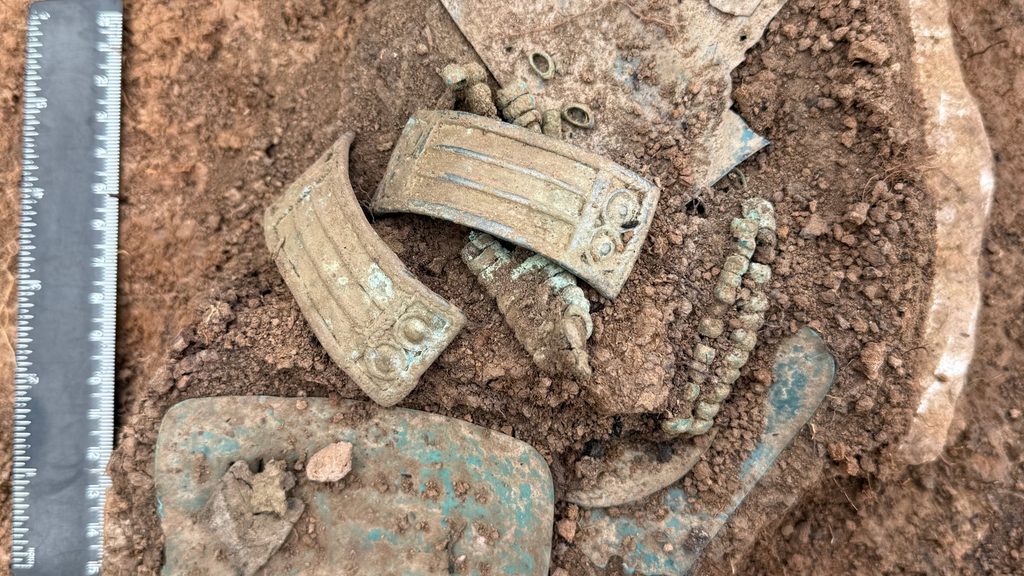
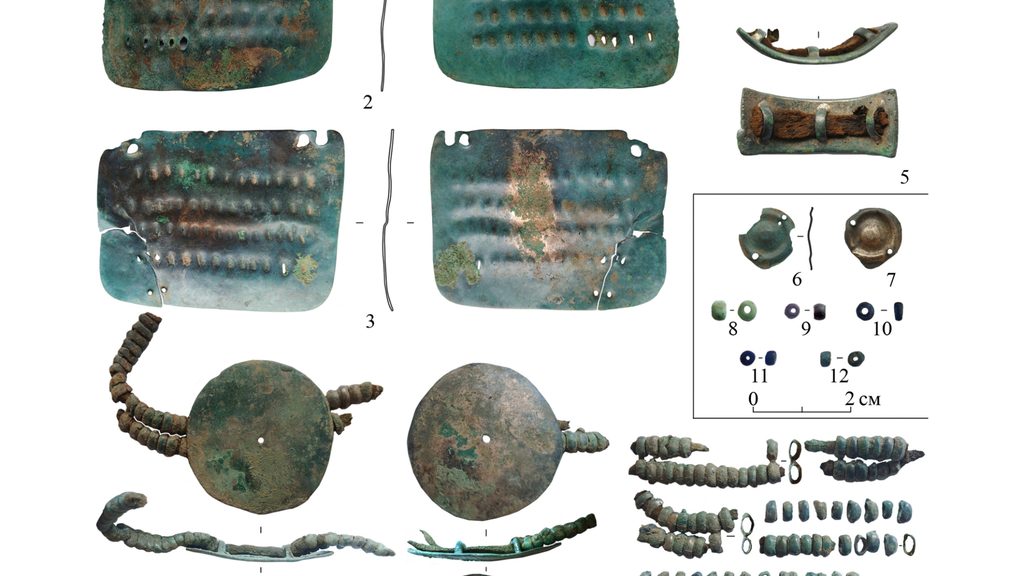
An expedition organized by Kazan Federal University and the Moscow-based company Arkheologiya Vostochno-Yevropeiskoy Ravniny (Archaeology of the East European Plain) has made a discovery that changes our understanding of the geographic reach of ancient cultures. Near the village of Tatarsky Sarsaz in Tatarstan’s Mendeleyevsky District, archaeologists uncovered a hoard of bronze ornaments and, more importantly, a previously unknown fortified settlement — the westernmost known settlement of the Pyany Bor culture.
In August 2026, archaeologists identified the previously undocumented site, designated Tatarsky Sarsaz I, provisionally dating it to the second or third centuries CE. Excavations uncovered a bronze chest ornament consisting of three plates, along with footwear ornaments that still retained their leather laces. The objects likely formed a complete set of accessories for a woman’s outfit, hidden by its owners for reasons that remain unknown.
Now that the finds have undergone initial analysis, Ruzil Sattarov, an associate professor in KFU’s Department of Archaeology and Ethnology, has discussed the discovery’s significance.
“What makes this discovery special is that the hoard itself — costume ornaments packed closely together in one place — was found within the Tatarsky Sarsaz fortified settlement,” he explained.
The finds belong to the Early Iron Age Pyany Bor culture, which dates from the second century BCE to the early third century CE. Researchers have already identified parallels with other known hoards in the region: the Akhtial hoard, discovered in 1913 in what is now Mendeleyevsky District, and a series of finds in Udmurtia’s Karakulinsky District — the Dubrovsky, Ilneshsky, and Troshkovsky hoards. Archaeologist Vladimir Gening linked the concentration of such assemblages in the Lower Kama basin to the operation of transcontinental trade routes.
The presence of imported objects in these hoards is particularly intriguing. The Akhtial hoard, for example, contained Roman bronze vessels made in Italy, possibly in Capua, dating to the late first or early second century CE. These objects point to connections between the local population and the ancient Mediterranean world long before the emergence of the Rus’ principalities.
“The hoard we discovered is exceptional in its own right, because relatively few such treasures are known. They are concentrated in eastern Tatarstan, on the right bank of the Kama River, and in southwestern Udmurtia. Many of these finds include Roman objects,” Sattarov emphasized.
Analysis of the site established that the fortified settlement near Tatarsky Sarsaz marks the westernmost known extent of settlement associated with the Pyany Bor culture. Previously, researchers believed that the culture’s boundaries lay slightly farther east.
“These sites add to our understanding of the Pyany Bor culture’s settlement patterns and of the people who lived here around the beginning of the Common Era. They show just how far this population extended and approximately where its western boundary lay,” the archaeologist explained.
Researchers are now preparing for large-scale excavations scheduled for 2027. A central question remains: was the hoard hidden during a time of danger, or was it part of a ritual assemblage? Answering that question will help researchers better understand both the history of the Pyany Bor people and the nature of their contacts with the ancient Mediterranean world.
The discovery of these previously unknown archaeological sites was made possible through a cooperation agreement between Kazan Federal University and Arkheologiya Vostochno-Yevropeiskoy Ravniny LLC.