

KFU’s lab models working to bring personalized oncology closer
Breast cancer remains one of the most common and dangerous cancers among women. The problem is that conventional laboratory models often fail to predict how a tumor will behave in an individual patient. A review article by scientists at Kazan Federal University, published in the journal Molecular Biology, brings together international experience in developing more accurate experimental systems — from 3D spheroids and organoids to organ-on-a-chip platforms and humanized mice.
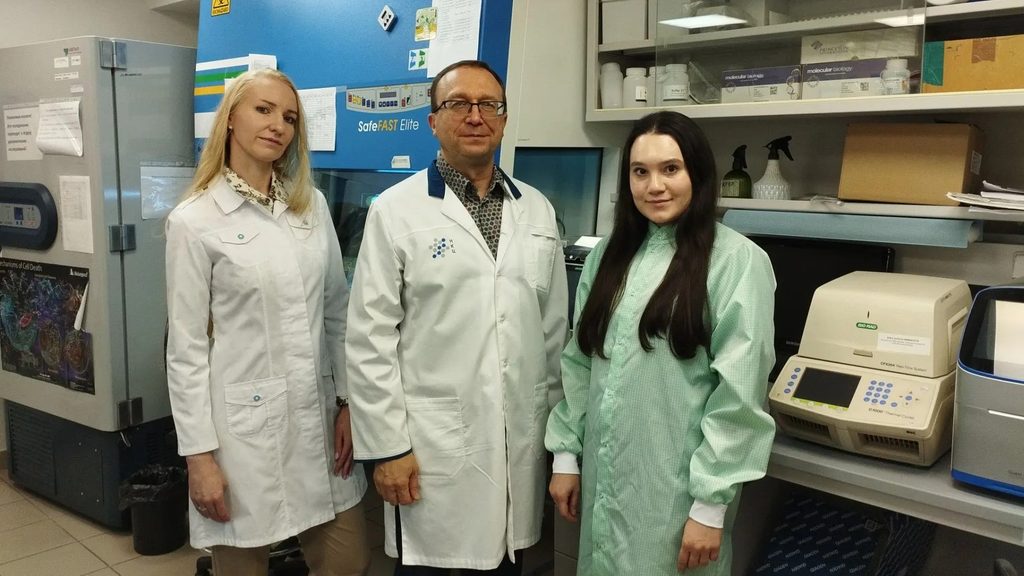
The authors are researchers at KFU’s Institute of Fundamental Medicine and Biology: Aisylu Kadyrova, a research laboratory assistant at the Gene and Cell Technologies Lab within the Biopharmpark Innovative Scientific and Technological Centre, and Albert Rizvanov and Valeria Solovyova, professors in the Department of Genetics. The research was supported by the Priority 2030 program.
“Our work explores how scientists are trying to create the most realistic possible laboratory replica — a model — of a breast tumor, so that we can understand its structure and anticipate how it will respond to treatment,” explained Albert Rizvanov, Professor in the Department of Genetics at the Institute of Fundamental Medicine and Biology.
For a long time, the main modelling tool was individual tumour cells grown on a flat surface in a Petri dish. This is a very convenient model, but a real tumour is far more complex. It contains different populations of cancer cells, immune cells, connective tissue cells, extracellular matrix, blood vessels and regions with insufficient oxygen. All of these factors influence whether a drug will work.
“That is why researchers are now moving from simple 2D cultures to three-dimensional spheroids, organoids, organ-on-a-chip models, patient tumors transplanted into laboratory animals, and humanized models. At the same time, we can sequence the tumor genome, make targeted changes to its function, and analyze the activity of thousands of genes and proteins,” explained Rizvanov.
The central idea of the Kazan researchers’ work is that the greatest value comes not from any single technology but from combining them. The more accurately a model reproduces an individual patient’s tumor, the greater the chance of identifying a genuinely promising drug — and ruling out an unpromising option — at the preclinical laboratory stage.
Studies indicate that approximately 90 per cent of drug candidates entering clinical development never become approved medicines. As the genetics professor explained, this happens for various reasons: a drug may prove insufficiently effective, its effects may be weaker than expected, or problems may arise with dosing, side effects and safety.
“That is precisely why we need more accurate preclinical models: to screen out as many unsuccessful candidates as possible before moving on to human trials,” the scientist stressed.
According to the researchers, a clinical trial does not start from scratch. Before a drug is first administered to a human, it undergoes extensive laboratory safety testing, while the trial protocol is reviewed by regulatory authorities and ethics committees. Participants receive a detailed explanation of the study, and their condition is continuously monitored throughout the trial. Rizvanov added that, in this context, ethics is not opposed to science but is an essential part of properly conducted research.
“There is another important consideration in oncology. Early-phase trials sometimes enrol patients with severe disease who have exhausted standard treatment options. In such cases, potential risks are assessed particularly carefully. At the same time, we must remember that the absence of a new therapy may itself amount to a death sentence for that patient. The purpose of a clinical trial is therefore not to sacrifice a patient for the sake of science, but to strike a justified balance between potential benefit and risk under the strictest possible monitoring,” the specialist emphasized.
How, then, are the organoids discussed in the review created? Albert Rizvanov explained that cells or small tissue fragments are isolated from a sample of the patient’s tumor and placed in a specialised three-dimensional environment that allows them to form spatial structures. The necessary nutrients and growth signals are then selected.
“Their value lies in their ability to retain a substantial proportion of the original tumour’s molecular and cellular characteristics: its characteristic mutations, the activity of particular signalling pathways, and differences between individual cell subpopulations. Different drugs or drug combinations can then be tested on the organoids in parallel to determine which option most effectively suppresses the growth of that particular tumour tissue. However, we must remember that a conventional organoid generally lacks a complete vascular network and the full diversity of immune and stromal cells. That is why more complex co-culture systems, in which components of the microenvironment are added to tumor cells, are now being actively developed,” Rizvanov added.
Clinical trials and individual centers around the world already use organoids as an additional tool for functional testing of tumor sensitivity to drugs. For breast cancer, however, this approach cannot yet be described as a widely established standard of care. In most cases, final treatment decisions are still based on clinical guidelines, disease stage, tumor morphology and validated molecular markers.
“The main limitations are time and cost, the fact that organoids cannot be reliably established from every sample, and the need to standardize the results and demonstrate that laboratory sensitivity reliably predicts the response in a patient. Organoids are therefore currently making the transition from a research technology to a practical tool for personalised oncology. In my view, they are particularly promising in situations where several reasonable treatment options are available and we need to determine which is best suited to a particular tumour,” the professor stressed.
The review also examines the evolution of breast cancer models, from simple 2D cultures to complex 3D systems and in vivo models. The earliest models are regarded as the gold standard of preclinical research. Problems arise when findings from such simple models are extrapolated directly to humans. According to Rizvanov, a cell growing on plastic lives under entirely different conditions from one inside a tumor. Much of the relevant tissue architecture is lost in a 2D culture. A drug may therefore be exceptionally effective at killing individual cells in a dish but work far less effectively in a three-dimensional tumor, let alone in a patient’s body.
“It is precisely this gap between works in the laboratory and works in humans that we are trying to narrow,” he said, describing the team’s goal.
The most important breakthrough discussed in the review is the shift from an abstract average tumor cell to a model of an individual patient’s tumor. Three-dimensional spheroids were a major step forward because they restored the cells’ spatial organisation. Organoids and patient-derived xenograft (PDX) models, in which a patient’s tumor is transplanted into an animal, went further by retaining some of the original tumor’s individual characteristics.
“I would not declare any one model the winner over all the others. Organoids are faster and more convenient for testing large numbers of drugs in parallel; PDX models allow us to assess tumour growth in a whole organism; and simple cultures remain indispensable for rapid mechanistic experiments. The real breakthrough is that we can now combine these models with sequencing, CRISPR genome editing and multi-omics analysis — not merely to answer the question ‘Does the drug work?’ but to try to explain why it works in this particular tumor,” Rizvanov elaborated.
The article also notes that personalized models, including patient-derived organoids (PDOs) and PDX models, preserve the heterogeneity of the original tumor. The biologist highlighted the importance of this feature for treatment, since a tumor is an entire ecosystem in which different clones of tumor cells coexist. Some may be sensitive to a drug, others may be resistant from the outset, and still others may be able to rapidly reconfigure their metabolism or signalling pathways.
“Preserving heterogeneity allows us to model the actual selection that occurs under treatment. A drug kills the sensitive portion of the tumour, while resistant cells gain an advantage and begin to dominate. Personalized models are therefore important not only for answering the question of what will shrink a tumour now, but also the more complex question: ‘What might remain after treatment, and how can we prevent resistance from developing?’ This is precisely what drives interest in drug combinations and sequential treatment regimens,” the scientist stated.
PDX models therefore often reproduce a real tumor’s sensitivity and resistance to treatment more accurately. But they are not perfect replicas: human cells in the tumour microenvironment are gradually replaced in part by mouse cells, establishing the model takes months, it is expensive, and it is not suitable for every sample. Thus, more accurate does not mean completely accurate. Its strength lies in being one step closer to the patient than a cell line that has undergone repeated passaging.
When it comes to modern technologies more broadly, the most promising approach today is to combine them in a coordinated sequence. Single-cell sequencing and spatial methods provide a map of the tumor: which mutations are present, which genes are active in different cells, and exactly where those cells are located. Multi-omics analysis integrates different layers of information — DNA, RNA, proteins and metabolites — and helps identify which network is disrupted in a particular tumor. Genome editing with CRISPR/Cas9, in turn, makes it possible to move from observation to experimentation.
“If data analysis shows that a particular gene is associated with resistance, we can switch it off, modify it or, conversely, activate it, and test whether it actually has a causal effect on the response to treatment,” the study’s author concluded.
Albert Rizvanov noted that the principal modern technologies are currently available to Russian scientists. Major research centers, for example, operate next-generation sequencers, CRISPR/Cas systems are widely used, and bioinformatics specialists and in-house computing resources are available. Access is uneven, however, because the latest methods require expensive consumables, reliable logistics, and a strong data analysis team.
“Sometimes the cost and consistency of access become more serious constraints than the absence of the technology itself. That is why shared research facilities, cooperation between laboratories, and the development of our own reagents, software solutions and bioinformatics infrastructure are particularly important to us,” he explained, describing the situation in Russia.
Discussing future prospects, Rizvanov emphasized that breast cancer is not a single disease: it comprises different molecular subtypes and stages, with widely varying clinical courses. Many localised forms can already be cured in a large proportion of patients. In advanced disease, the aim is often to control the tumor for as long as possible, turning the disease into a chronic condition.
“I think that in ten years, the balance will shift even further in the patient’s favour. We will detect minimal signs of recurrence earlier, select targeted therapies and immunotherapies more precisely, and use combinations more frequently on the basis of molecular profiling and functional testing in patient-derived models. For some metastatic tumours, long-term control over many years will become routine. It would be wrong to promise that within ten years we will completely defeat breast cancer in all its forms. A realistic goal is to make treatment increasingly precise and less toxic, and to deny tumors the time to develop a resistant clone,” the researcher said, outlining current prospects.
Kazan Federal University has spent many years developing experimental oncology, cell and gene technologies, three-dimensional tumour models and approaches to preclinical testing. Its researchers have previously analysed the potential of tumor spheroids and organoids for personalized medicine, investigated how tumor cells acquire stem-like properties in three-dimensional models, and developed multicomponent cell-based test systems for screening anticancer drugs.
“For me, this topic is a logical continuation of our group’s many years of work in experimental oncology. Breast cancer illustrates one of the central problems in modern oncology particularly well: two tumors that appear to fall under the same diagnosis may have completely different molecular characteristics and respond differently to treatment. There is certainly good reason to continue this line of research. We are interested not only in a particular cancer site but also in a broader challenge: learning to build experimental models that genuinely predict how a tumor will behave in a patient,” the professor concluded.
The Priority 2030 program is important because it enables different fields to be brought together into a single technological pipeline, from molecular analysis and cell-based models to preclinical validation and subsequent clinical translation. In modern oncology, having a good sequencer or a well-equipped cell laboratory alone is not enough. Bioinformatics, molecular biology, cell technologies, in vivo models, and collaboration with clinicians are all essential. The university’s strength lies in its ability to bring these capabilities together.