

KFU geologists and petroleum scientists present their developments in Beijing
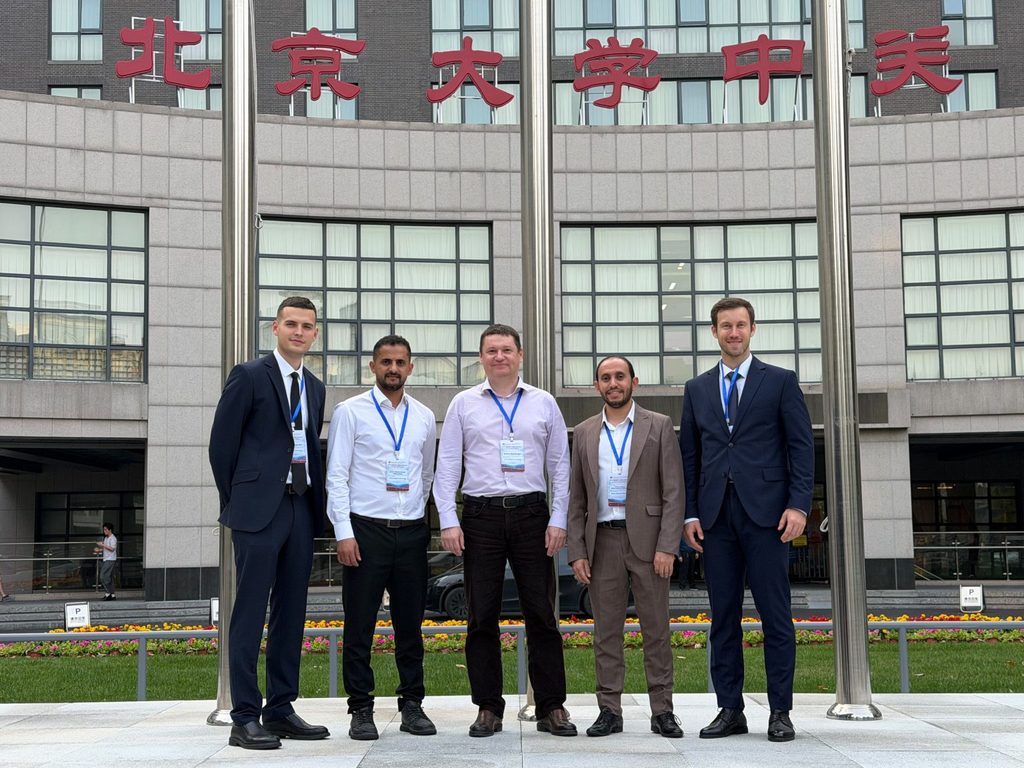
Researchers from the Institute of Geology and Petroleum Technologies at Kazan Federal University took part in the China–Russia Joint Workshop on Earth Sciences and Geodynamics 2026, held at Peking University in China.
Organised with the participation of Peking University’s School of Earth and Space Sciences and the Earth Sciences Center of the China–Russia Association of Fundamental Sciences, the workshop brought together scientists, faculty members, researchers, doctoral students, and undergraduates from Russia and China working in geology, geophysics, geodynamics, and related disciplines. Participants included members of the Russian and Chinese academies of sciences, as well as representatives of research centers and universities in Novosibirsk, Moscow, Irkutsk, Kazan, and other Russian cities.
KFU was represented by five staff members from the Institute of Geology and Petroleum Technologies (IGPT): Igor Ognev, Chair of the Department of Oil and Gas Geology; Anton Kolchugin, Chair of the Department of Mineralogy and Lithology; Alexey Khayuzkin, Research Fellow at the In-Situ Combustion Laboratory; Ameen Al-Muntaser, Leading Research Fellow at the Laboratory for the Generation, Storage and Transportation of Hydrogen and Low-Carbon Energy Carriers; and Shadi Said, Junior Research Fellow at the same laboratory. The workshop provided a platform for presenting research findings, exchanging expertise, discussing joint research, and exploring opportunities for further cooperation.
The main objective of this major scientific and applied research event was to foster long-term cooperation between the two countries. Participants discussed the evolution of continental crust, tectonics and geodynamics, the formation and transformation of rocks, the development of energy and mineral resources, and the application of modern analytical methods, geophysical surveys, mathematical modelling, and digital technologies.
The research presented by IGPT scientists generated considerable interest among workshop participants. Alexey Khayuzkin presented the results of long-term studies of the Domanik deposits — source rocks of major importance to the petroleum potential of the Volga–Urals region. His presentation focused on sedimentation in the Domanik Sea, palaeogeographic reconstructions and facies zonation, and prospects for developing shale hydrocarbon resources.
Anton Kolchugin presented the Kazan school of geology’s approaches to studying carbonate deposits, using oil-bearing carbonate reservoirs in the Volga–Urals region as examples. He described an integrated approach encompassing sedimentation, subsequent rock alteration by deep-seated fluids, and the stages of hydrocarbon migration and accumulation. Particular attention was paid to modern research methods and the development of in-house analytical capabilities.
“Events like this are very important for establishing and strengthening international professional ties,” said the Chair of the Department of Mineralogy and Lithology. “They allow us not only to share our own research findings, but also to learn about our colleagues’ research approaches, discuss common scientific challenges, and identify areas of shared interest for future collaboration. The geological field trip to the Wutai Mountains was particularly valuable. Examining geological sites firsthand helps us better understand the structure and evolution of the Earth’s crust and compare geological processes in the Chinese and Russian parts of the Eurasian continent. This exchange of knowledge creates further opportunities for comparative geological research.”
The field trip to the Wutai Mountains focused on the evolution of the Archaean–Palaeoproterozoic basement of the North China Craton. Participants examined geological evidence of ancient continental crust formation, high-pressure granulite-facies metamorphism, the development of greenstone belts, and Palaeoproterozoic tectonic evolution. Examining these processes provided an opportunity to discuss fundamental questions concerning the growth and stabilisation of continental crust and to compare geological data relevant to the study of ancient geological structures in Russia and China.
In his workshop presentation, Ameen Al-Muntaser discussed KFU scientists’ research into producing hydrocarbons from kerogen-bearing rocks of the Domanik deposits. The research focuses on the hydrothermal conversion of kerogen using water-soluble nickel- and iron-based catalytic systems. The findings indicate that nickel sulphate improves the yield and quality of synthetic oil, as well as rock wettability to water. These results open up prospects for developing technologies to exploit hard-to-recover hydrocarbon resources.
“I was impressed by the participants’ enthusiasm, their openness to scientific dialogue, and their willingness to discuss new research ideas,” he said. “Meetings like this create a supportive environment for exchanging expertise, finding unconventional solutions, and building international research teams. I hope this event will mark the beginning of long-term, productive cooperation between Peking University and Kazan University.”
Igor Ognev chaired one of the sessions and presented findings from a study of the radioactivity of crystalline basement rocks in the eastern Volga region, based on measurements of core samples from KFU boreholes. This interdisciplinary research highlights the importance of studying rock radioactivity and thermophysical properties to reconstruct the geothermal structure of the Volga–Urals region. According to the information presented, the study is unique for this region. Igor Ognev also delivered a research seminar for doctoral students and undergraduates at the Institute of Continental Geodynamics and Georesource Engineering, focusing on the use of satellite gravimetry data to model the structure of the Earth’s crust and continental heat flow.
During their visit to Beijing, the KFU researchers met with representatives of the Chinese oil and gas company Sinopec. Anton Kolchugin and Alexey Khayuzkin shared their experience of studying geological formations similar to those investigated by Sinopec specialists.
“Representatives of Sinopec showed considerable interest in our research, particularly our work on developing low-permeability reservoirs. The discussion demonstrated that our organisations share scientific and practical interests. We hope that exchanging expertise and research approaches will help us identify specific areas for further cooperation,” Alexey Khayuzkin said.
Source text