

Memorandum of understanding signed with the University of Baghdad
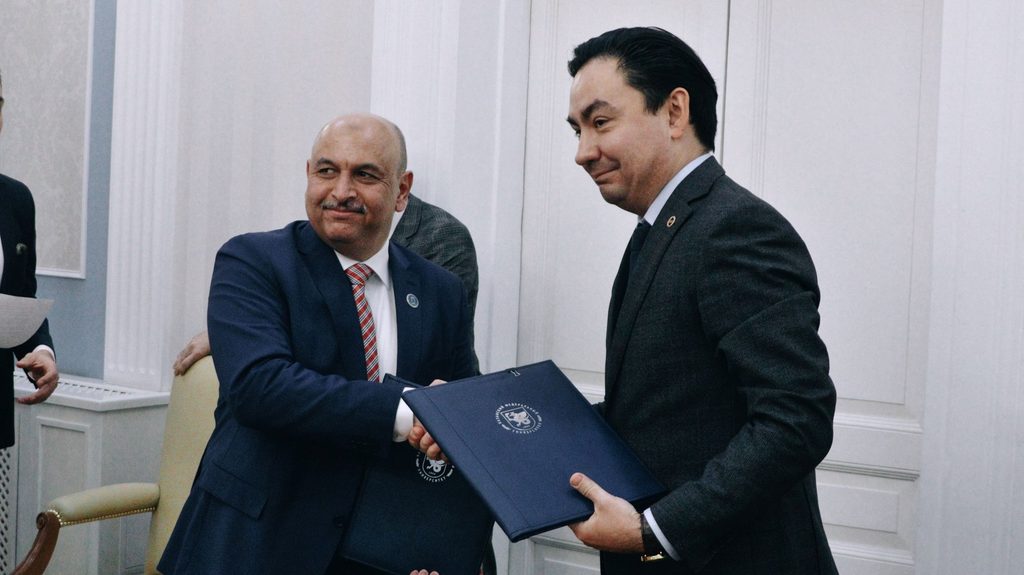
Kazan Federal University hosted a ceremony to sign a Memorandum of Understanding between KFU and the University of Baghdad, Iraq. The document is intended to lay the groundwork for long-term cooperation in oil and gas education, research, and the implementation of advanced technologies.
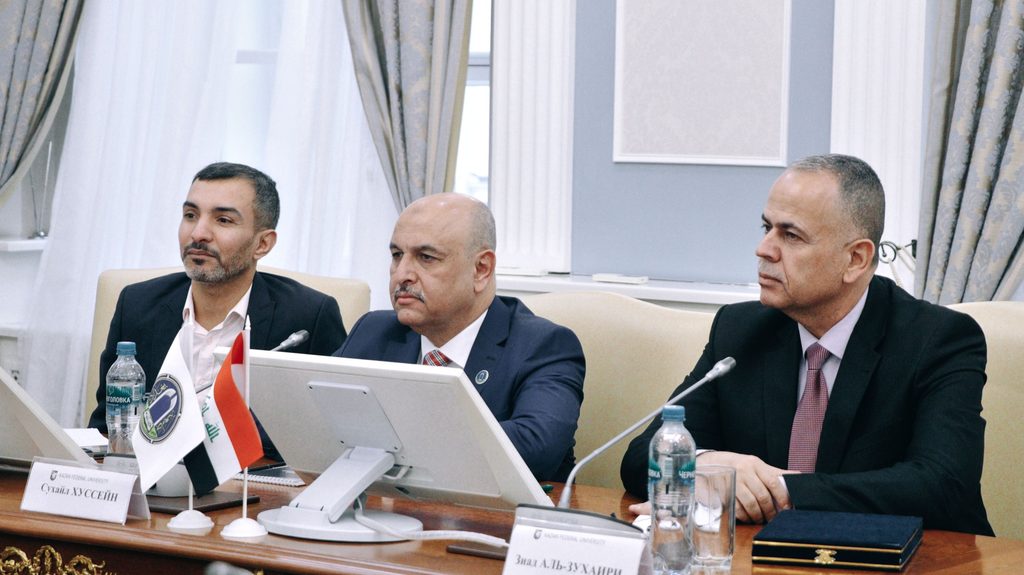
The memorandum was signed by Timirkhan Alishev, Vice-Rector for International Affairs at Kazan Federal University, and Suhail Najm Abdullah, Vice President for Research at the University of Baghdad. The ceremony was also attended by Danis Nurgaliev, Director of KFU’s Institute of Geology and Petroleum Technologies (IGPT), and Ziad Tariq Abd Ali, Associate Dean for Research and Postgraduate Studies at the University of Baghdad’s College of Engineering.
Welcoming the Iraqi delegation, Alishev highlighted Kazan’s deep historical ties with the East. He noted that the city was the birthplace of several Russian schools of scientific thought that continue to thrive today, and that Kazan University is rightly regarded as a center for Eastern studies.
“Arabic language teaching gained a strong foothold here, and that tradition continues today. We have a Center for Arab Culture, whose students undertake internships abroad,” the vice-rector emphasized.
Alishev also introduced the university’s structure, outlining its student and faculty numbers, fields of study, international student body, branch campuses, partnership with KAMAZ, catalyst production, museums, kindergartens, and school. He paid particular attention to language programs.
“Most programs are taught in Russian, while around 20 are offered in English. Many of our natural science institutes could easily be considered part of IT, because artificial intelligence is widely used throughout their work, including research. This makes it difficult to draw a clear line between engineering and the natural sciences,” Alishev noted.
The vice-rector singled out the university’s own television channel, UNIVER TV, as a particular source of pride.
“KFU is the only university with its own television channel broadcasting around the clock. We also have experience exchanging content,” he said, inviting his Iraqi colleagues to adopt a similar approach.
Alishev also emphasized that Kazan Federal University is always open to international students and actively promotes international exchanges. Two students from Iraq enrolled at the university this year, and KFU is ready to continue these efforts. It also welcomes applications to its Summer School for international students in their third and fourth years of undergraduate study.
“Signing this memorandum will provide a promising starting point for cooperation. I am very pleased that you have such a full program, and it is a great honor for us to welcome you. We plan to open a branch campus in Baghdad. In late November or early December, we expect a delegation from Iraq’s Ministry of Education, led by the minister or a deputy minister. Our goal is to fill this niche, especially since Kazan is a meeting point with the East, and Baghdad holds a special place for us,” the vice-rector concluded.
The Director of KFU’s Institute of Geology and Petroleum Technologies outlined the priority areas for joint work.
“Iraq is one of the world’s largest oil-producing countries, with enormous reserves. It also has substantial quantities of heavy oil and needs the specialists we train and the technologies we develop. We will work in two key areas: training specialists and jointly implementing our technologies,” Nurgaliev explained.
He added that the cooperation would also include support for Russian companies operating in Iraq.
“Many of our companies operate there and produce oil. I envision exchanges in both technology and specialist training: they will come to us, and we will go to them. It is also very important for us to learn about Iraq’s oil — how it is extracted and what technologies they use — and to learn from their experience. Above all, of course, we want to transfer our technologies to make oil production more efficient, environmentally friendly, and cost-effective,” the institute’s director emphasized.
For his part, the University of Baghdad’s vice president expressed gratitude for the warm welcome and highlighted the historical ties between the two universities.
“We are at the university best suited to us. Our university also has a distinguished history in Iraq. I have studied your history and identified many opportunities for cooperation. We hope to exchange students and faculty. Our university welcomes your students, and we will allocate government-funded places in various fields of study,” Suhail Najm Abdullah said.
He also noted that the University of Baghdad takes pride in its Department of Russian Language, which is more than 50 years old, and proposed discussing the establishment of a joint department in the near future.
The representative of the University of Baghdad’s College of Engineering added that his college is the university’s largest and offers 13 fields of study.
“We hope to advance engineering and sign agreements to cooperate with your university. The foundation is already in place,” Ziad Tariq Abd Ali concluded.
The signing of the memorandum marks an important step in strengthening Kazan Federal University’s international ties and bringing its research innovations to the Middle Eastern market.
The guests then proceeded to tour the IGPT.
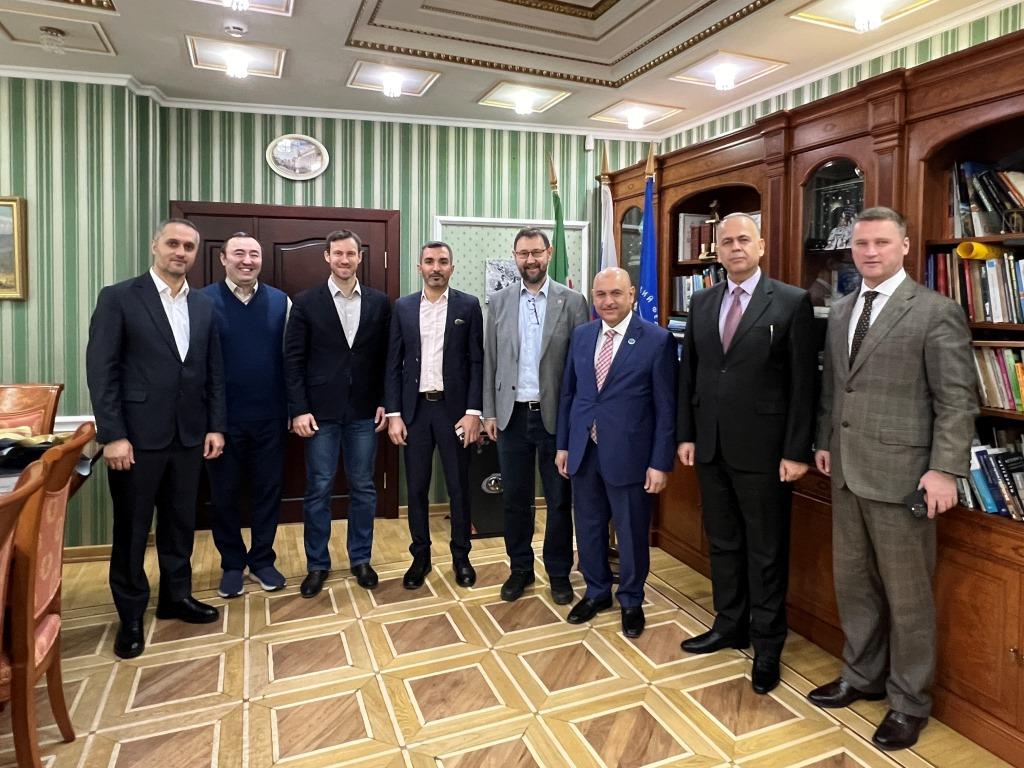
The meeting participants included Danis Nurgaliev; Pavel Krylov, Deputy Director for Research; Anton Kolchugin, Chair of the Department of Mineralogy and Lithology; Igor Ognev, Chair of the Department of Petroleum Geology; Ameen Al-Muntaser, Leading Research Fellow at the Research Laboratory for the Generation, Storage, and Transportation of Hydrogen and Low-Carbon Energy Carriers; Mustafa Abaas, Research Fellow at the same laboratory; and Yury Nurmeev, International Cooperation Officer.
At the beginning of the meeting, Nurgaliev announced that Kazan Federal University and the University of Baghdad had signed a Memorandum of Understanding. The document is intended to lay the groundwork for long-term cooperation in oil and gas education, research, and the implementation of advanced technologies. He then presented the academic programs offered by the IGPT, its partnerships with industry, and its research developments. The international guests, in turn, gave a presentation on the University of Baghdad. In discussing prospects for cooperation, the university representatives focused primarily on joint research and workforce training for the oil and gas industry.
“We have significant opportunities for joint research, particularly in petroleum geology. We are interested in areas such as geological and geophysical exploration, reservoir modeling, and enhanced oil recovery,” emphasized Suhail Najm Abdullah. “We are particularly interested in cooperation on educational and research programs, sharing expertise, and organizing internships and professional development courses for researchers, engineers, and specialists from Iraqi universities and oil and gas companies.”
He expressed confidence that the visit to KFU would mark an important step toward a long-term research and educational partnership between the two universities, helping them address pressing scientific and technological challenges.
“Kazan University has left us with an exceptionally positive impression: modern research infrastructure, well-organized research activities, and the active involvement of undergraduate, master’s, and doctoral students in research projects. We would particularly like to highlight the close integration of fundamental research with the practical needs of industry. We see significant opportunities to strengthen research and educational cooperation between the University of Baghdad and KFU, including academic and research exchanges,” said Ziad Tariq Abd Ali.
Summing up the visit, Danis Nurgaliev highlighted the universities’ shared research interests.
“Iraq faces the same challenges in developing oil fields as Russia does. As one of the world’s largest oil-producing countries, Iraq has high-sulfur crude oil. We also have substantial quantities of this type of oil. The Institute of Geology and Petroleum Technologies has developed technologies that can reduce its sulfur content. I believe the University of Baghdad also has many promising technologies for oil field development. We can collaborate and advance our research together,” said the institute’s director.